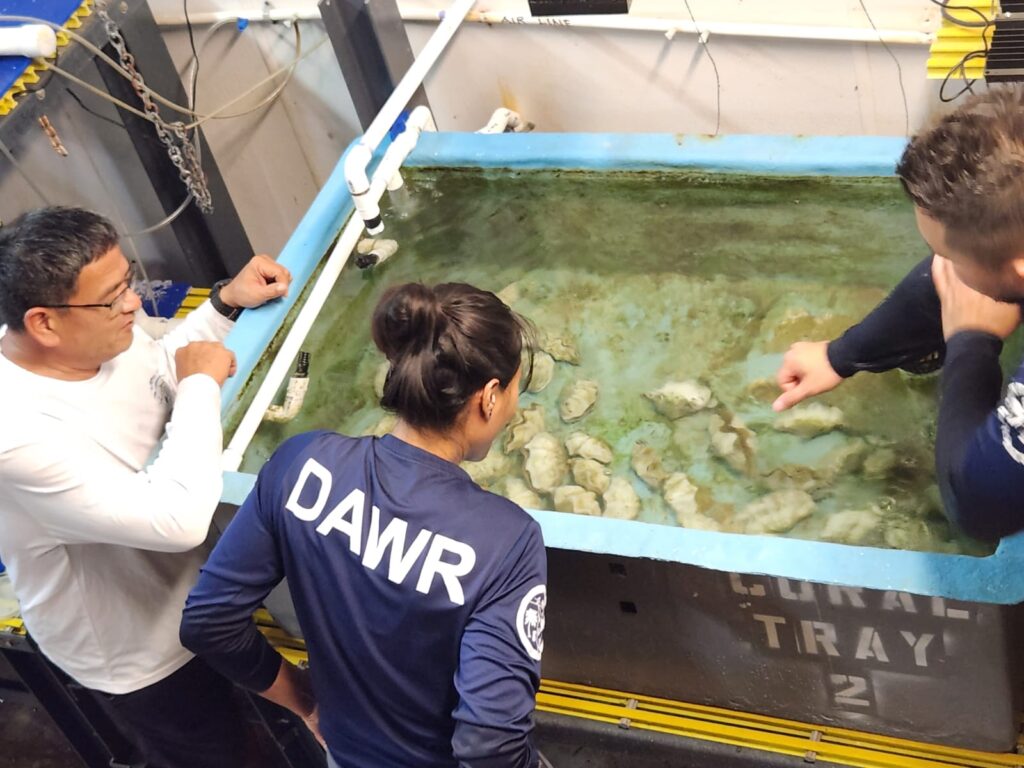
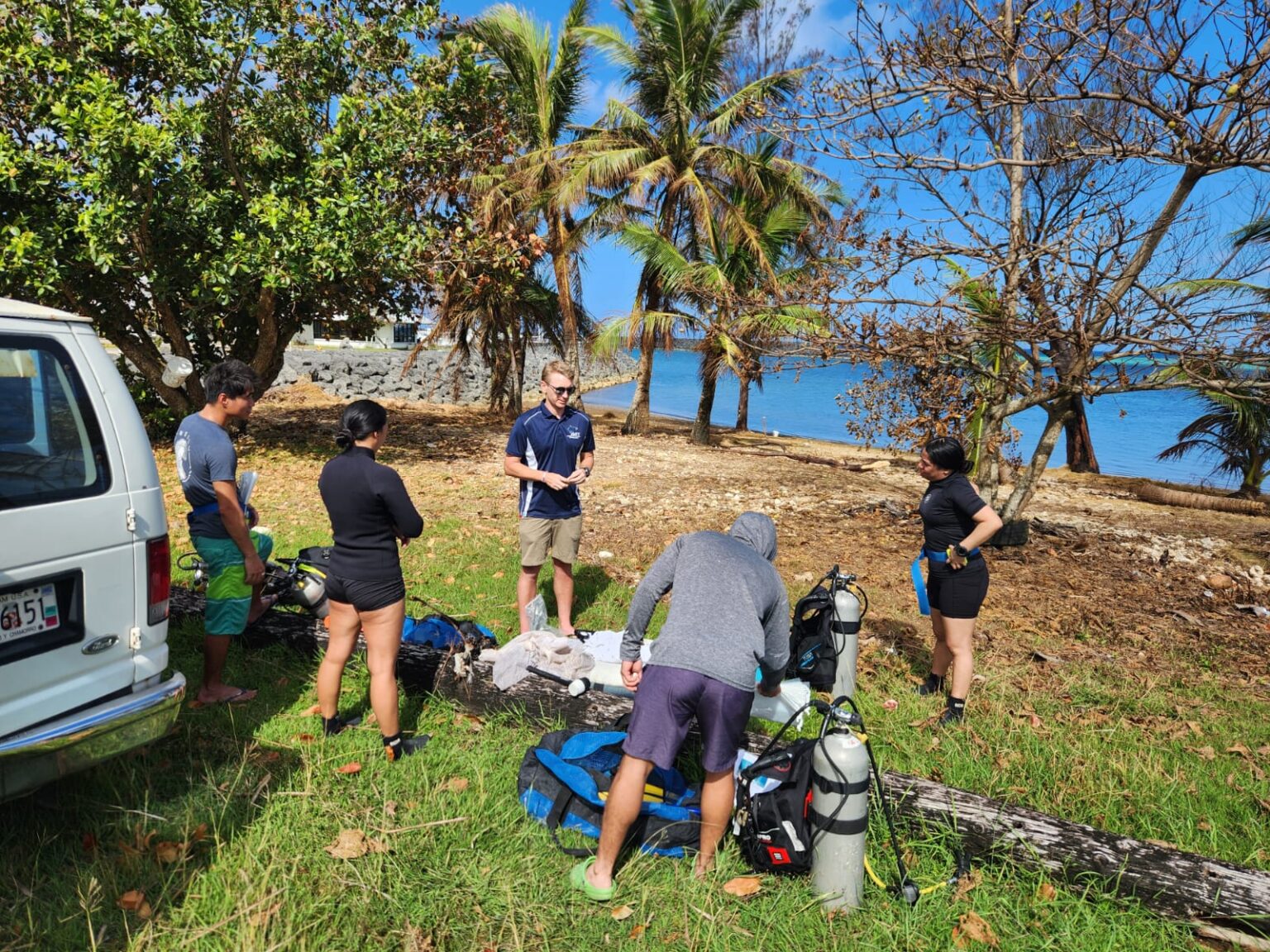
Before dredging commenced at Agat Marina in 2026, Aquarium of Guam worked with government partners to identify and preserve selected coral specimens that may support future research, education and conservation.
Initial surveys of the work area revealed living coral colonies growing within the harbour. Once the project commenced, some of those corals would inevitably be affected.
The discovery did not stop the dredging project, nor was it intended to. Instead, it presented a simple conservation opportunity: could some of these corals be preserved before they were lost?
Working with the Guam Department of Agriculture’s Division of Aquatic and Wildlife Resources and the U.S. Army Corps of Engineers, Aquarium of Guam identified and collected selected coral specimens for ongoing care, observation and future study.
Looking Beneath the Surface
The coral colonies found within Agat Marina had established themselves in a sheltered environment where temperature and salinity can fluctuate more than on offshore reefs.
Scientists are particularly interested in corals that survive under varying environmental conditions because they may offer valuable opportunities for future research and observation. While there is no certainty that these corals possess unusual resilience, preserving them allows scientists to study their characteristics and potential over time. They may also serve as seed stock for aquaculture, with the potential to produce offspring that could support the future rehabilitation of degraded reefs.
Preserving What Could Be Saved
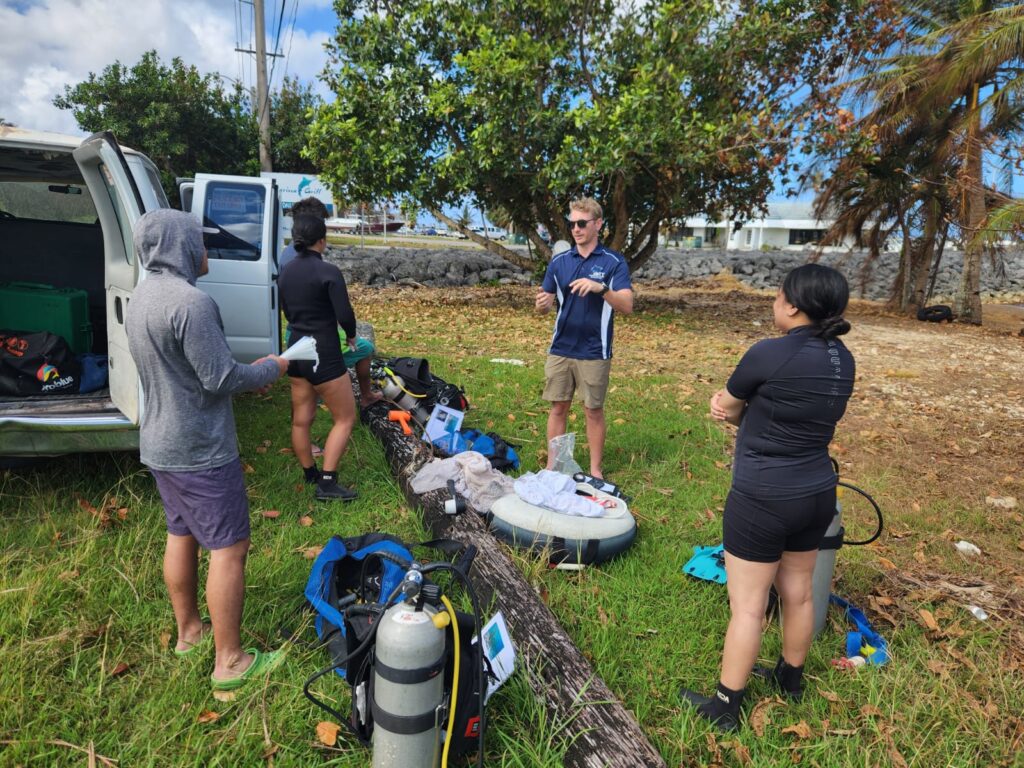
On 23 April 2026, Aquarium of Guam divers collected selected coral fragments from within Agat Marina under a specially issued Scientific Collection Permit.
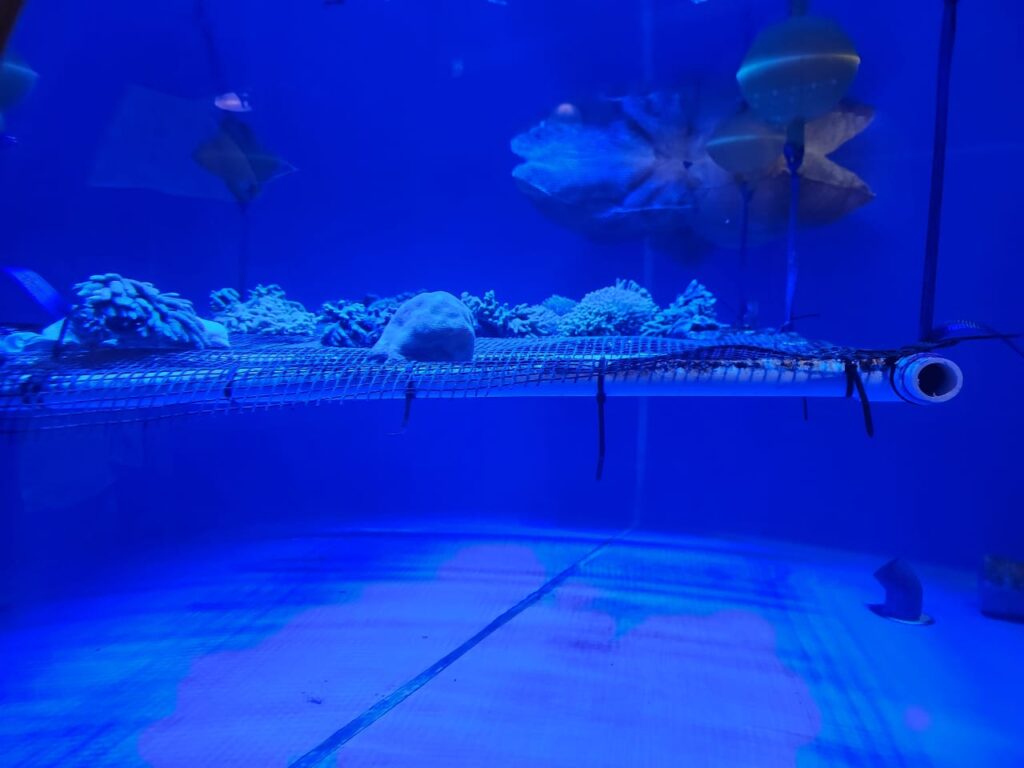
The specimens were carefully transported in seawater and acclimated into aquarium systems where temperature, salinity and pH could be monitored. The objective was not to relocate an entire reef or offset the dredging project. Instead, it was to preserve representative specimens that may otherwise have been lost during the planned works.
“Aquarium of Guam’s role was to identify and preserve coral that might otherwise have been lost during the dredging project. By maintaining these specimens in our care, we’re ensuring that opportunities for future research, education and conservation remain available.”
Alastair Cuttriss, Aquarium of Guam
A Living Conservation Resource
Today, the surviving specimens continue to be maintained at Aquarium of Guam as part of the aquarium’s conservation programme.
The corals may contribute to future research, support educational programmes, or assist future conservation initiatives.
Equally, they may simply help scientists better understand how corals respond to challenging environmental conditions. This approach is known as conservation biobanking: maintaining living organisms so they remain available for future research, conservation and education.
Keeping Future Options Open
Not every conservation effort results in an immediate restoration outcome. Sometimes, conservation is about recognising that a natural resource may have future value and taking practical steps to ensure it is not lost.
The coral collected from Agat Marina may never return to the harbour where it was found. What is certain, however, is that these specimens now have a future that would not otherwise have existed. By preserving them today, Aquarium of Guam has kept open opportunities for learning, research and conservation tomorrow.